Hoover Appliance Repair
205-941-6139
Hoover Dishwasher Repair
A washer that won't spin or a dryer that won't heat can bring your entire laundry routine to a halt. Whether your washer is leaking, your dryer is running but not drying, or your machine won't even start, our technicians diagnose the problem quickly and get it fixed — often in a single visit. We repair front-load, top-load, gas, and electric washers and dryers from all major brands, and proudly serve homeowners across Hoover, AL and the surrounding Birmingham metro area.
Washers and dryers combine water systems, heating elements, motors, belts, and electronic controls, all working together through repeated, heavy-duty cycles. Because a single failed part can produce symptoms that look like something else entirely, correctly diagnosing the actual cause — rather than replacing the most obvious-looking part — is what separates a lasting repair from one that leaves you calling again in a few weeks.
Signs You Need Washer or Dryer Repair
- Washer won't start or won't respond to controls
- Washer won't spin or drain properly
- Washer leaking water onto the floor
- Loud banging, thumping, or grinding during the wash cycle
- Washer shaking or "walking" during the spin cycle
- Dryer running but not producing heat
- Dryer taking multiple cycles to fully dry clothes
- Dryer making squealing, thumping, or grinding noises
- Dryer drum not turning
- Burning smell coming from the dryer
If any of these sound familiar, it's worth having a technician take a look before a small issue turns into water damage, a fire hazard, or a bigger repair.

Common Washer and Dryer Problems
Washer Won't Start
A washer that won't start at all is often not actually a washer problem — a tripped circuit breaker, an unlatched lid or door, or a lid switch that's failed to engage are the most common causes we find, and all are quick to rule out. If power and the door latch check out, the next likely culprits are a faulty door/lid switch itself (which tells the control board it's safe to run) or a failed control board or timer. On some models, a blown thermal fuse in the control system can also prevent the unit from starting.
Washer Won't Spin or Drain
If your washer fills and agitates but won't spin or drain at the end of the cycle, the most frequent cause is a clogged drain pump, often blocked by a small item like a sock, coin, or piece of debris that's worked its way into the pump housing. A worn or broken drive belt (on belt-driven models) can also prevent the drum from spinning even though the motor runs. Less commonly, a failed lid switch can prevent spin cycles from engaging as a safety measure, since most washers won't spin at high speed unless the lid is confirmed closed and locked.
Washer Leaking Water
Water leaking from a washer usually comes from one of a few sources. On front-load machines, a worn or torn door boot seal (the rubber gasket around the door) is one of the most common causes, especially once cracks or tears develop from repeated use. A loose or damaged water inlet hose connection at the back of the unit can also leak, as can a failing water inlet valve. On top-load machines, a cracked tub or a failing pump seal are more frequent culprits, particularly on older units.
Washer Shaking or "Walking" During Spin
Excessive vibration or a washer that moves across the floor during the spin cycle is often simply caused by an unbalanced load or unlevel feet, both of which are easy for a homeowner to check first. If the machine is level and the load is balanced but shaking continues, the issue is more likely worn suspension springs or shock absorbers (on front-load models) or worn tub bearings, which allow the drum to move more than it should during high-speed spinning.
Loud Banging or Grinding During Wash Cycle
A grinding noise during agitation or spin often points to a worn drive belt, a failing motor coupler (a small part that connects the motor to the transmission on some top-load models), or worn tub bearings. A banging noise can also indicate a foreign object caught between the inner and outer tub.
Washer Not Filling With Water
If your washer isn't filling properly, the most common cause is a faulty water inlet valve, which can fail partially (slow fill) or completely (no fill). A clogged inlet screen — small mesh filters where the water hoses connect — can also restrict flow and is an easy first thing to check.
Dryer Not Heating
A dryer that tumbles normally but produces no heat is one of the most common dryer complaints. On electric dryers, a burned-out heating element is the most frequent cause. On gas dryers, a failed igniter is the top culprit — similar to a gas oven, the igniter needs to get hot enough to open the gas valve, and a weakening igniter often fails to reach that temperature. Other possibilities on either type include a tripped thermal fuse (a safety component that cuts power to the heating circuit if the dryer overheats) or a faulty thermostat or cycling thermostat.
Dryer Taking Multiple Cycles to Dry Clothes
If your dryer produces heat but clothes still take far longer than usual to dry, the most common cause is a clogged exhaust vent, either from lint buildup inside the vent hose or a blockage at the exterior vent cap. This is also a fire safety concern, not just a performance issue, so it's worth addressing promptly. Other causes include a partially failed heating element that's producing reduced heat, or a failing cycling thermostat cutting the heat cycle short.
Dryer Drum Not Turning
A dryer that runs (you can hear the motor and see the light) but the drum doesn't turn is usually caused by a broken drive belt, which wraps around the drum and connects it to the motor. On some models, a worn drum roller or glide can also prevent the drum from turning smoothly, or in more severe cases, cause it to stop entirely.
Dryer Making Squealing or Grinding Noises
A squealing noise often points to a worn drive belt or a failing idler pulley, which keeps tension on the belt as it drives the drum. A grinding or thumping noise frequently comes from worn drum rollers or glides, which support the drum as it spins and wear down over years of use.
Dryer Shutting Off Mid-Cycle
A dryer that starts but shuts off before the cycle finishes is often triggered by the thermal safety fuse, which cuts power if the dryer overheats — commonly caused by a clogged exhaust vent restricting airflow. If vent cleaning doesn't resolve it, a failing thermostat or control board may be at fault.
Burning Smell From the Dryer
A burning smell is a safety concern that shouldn't be ignored. It's often caused by lint accumulation near the heating element, a slipping drive belt creating friction, or in less common cases, a motor bearing issue. If you notice this smell, we recommend turning off the dryer and having it inspected before running it again.
Common Washer & Dryer Error Codes
Samsung
- 4E / 4E1 — Water supply/fill error
- 5E / 5E1 — Drain error
- dE / dE1 — Door/lid not closing properly
- tE — Temperature sensor (dryer) error
LG
- OE — Drain error
- IE — Water inlet/fill error
- dE — Door error
- tE1 / tE2 — Dryer heating/temperature sensor error
Whirlpool / KitchenAid / Maytag (shared platforms)
- F5E2 — Door lock error
- F7E1 — Motor speed sensor error
- F9E1 — Long drain time detected
- PF — Power failure detected during a cycle (not necessarily a fault)
GE
- Flashing "End of Cycle" light with beeping — Often related to door latch or drain issues, depending on model
If your unit displays a code not listed here, our technicians can look it up by exact model number during your appointment, since codes vary meaningfully between model years even within the same brand.
Washer & Dryer Brands We Repair
- Whirlpool
- Samsung
- LG
- GE
- Maytag
- Kenmore
- Electrolux
- Speed Queen
- Bosch
- Frigidaire
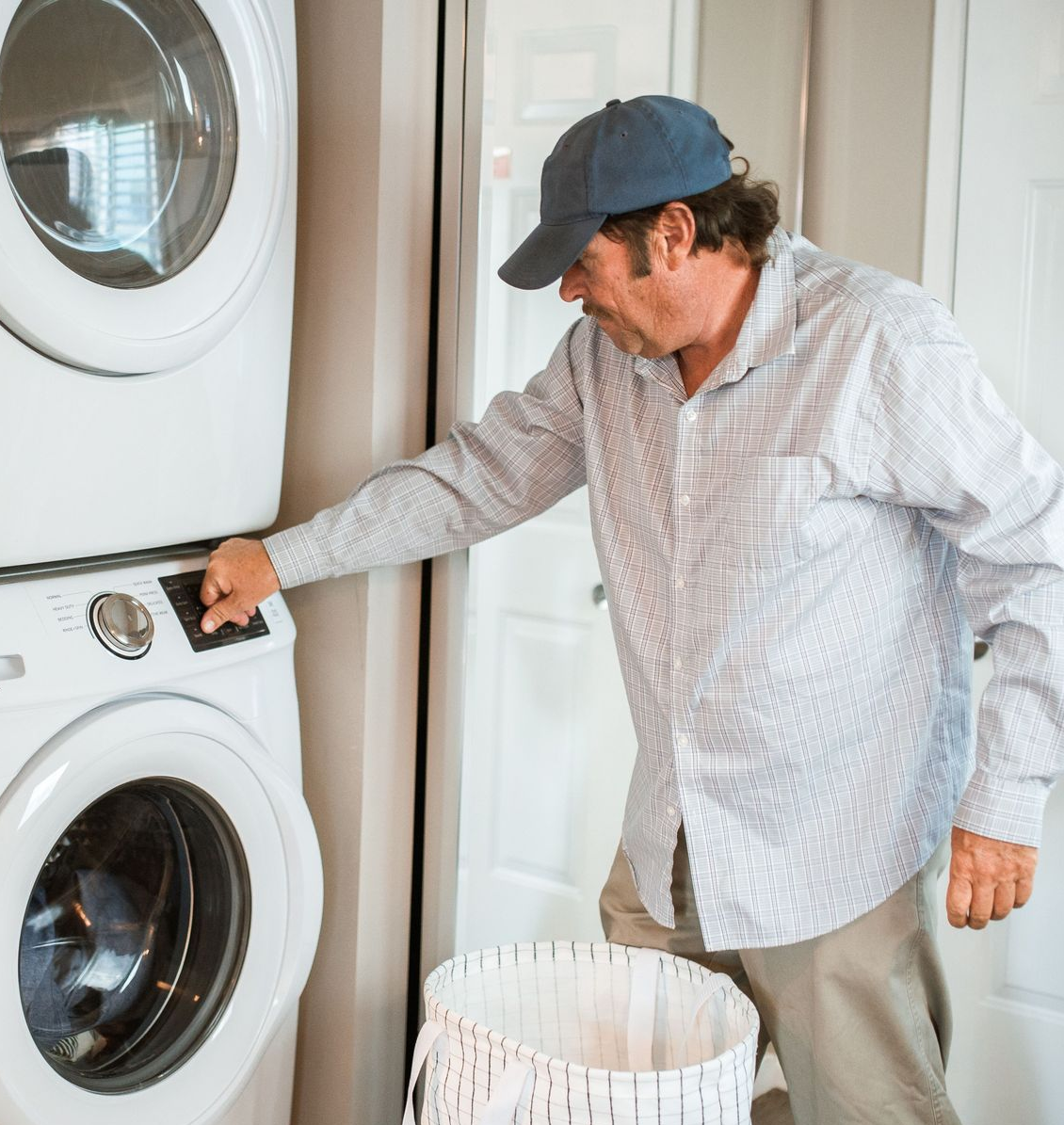
We service both standard and high-efficiency (HE) front-load and top-load models, as well as stackable and all-in-one washer-dryer combo units common in townhomes and smaller floor plans throughout the Hoover area.
Repair or Replace?
Most washer and dryer issues — belts, pumps, valves, igniters, thermal fuses — are inexpensive to repair relative to the cost of a new unit, making repair the right call in most cases. Replacement generally only makes sense when the motor or control board fails on a unit that's already 10+ years old, since at that point the repair cost can approach a meaningful percentage of a new machine's price. Our technicians will give you a straightforward recommendation based on your unit's age and the actual cost of the needed repair, rather than steering you toward an unnecessary replacement.
Simple Maintenance Tips to Avoid Future Repairs
A few regular habits can meaningfully extend the life of your washer and dryer and reduce the odds of a costly repair:
- Clean the dryer lint trap before every load, and check the exterior vent cap periodically for blockages
- Leave the washer door or lid open slightly between loads to prevent mold and odor buildup, especially on front-load models
- Check hoses behind the washer periodically for cracks, bulges, or leaks
- Avoid overloading either machine, which strains belts, motors, and bearings
- Run a washer cleaning cycle monthly to reduce detergent and mineral buildup
- Keep both machines level to reduce excess vibration and wear on internal components
Frequently Asked Questions
Why won't my washer spin?
This is usually caused by a clogged drain pump, a worn drive belt, or a lid switch that isn't engaging properly, which prevents the spin cycle from starting as a safety measure.
Why is my dryer not producing heat?
On electric dryers, this is usually a burned-out heating element. On gas dryers, it's most often a weak or failed igniter that isn't getting hot enough to open the gas valve.
Why does my dryer take multiple cycles to dry clothes?
A clogged exhaust vent is the most common cause, and it's also a fire safety concern worth addressing promptly. A partially failing heating element can also cause this.
Why is my washer leaking water?
On front-load machines, a worn door boot seal is the most common cause. On top-load machines, a cracked tub or failing pump seal is more likely.
How much does washer or dryer repair cost?
Cost depends on the specific issue, but we always provide a clear, upfront price before any work begins.
Is it safe to keep using my dryer if I smell burning?
No — turn off the dryer and have it inspected before running it again. A burning smell can indicate lint buildup near the heating element or a mechanical issue that poses a fire risk.
Do you repair both gas and electric dryers?
Yes, our technicians repair gas and electric dryers from all major brands.
Why is my washer shaking or moving during the spin cycle?
This is often caused by an unbalanced load or unlevel feet. If the problem persists after checking both, worn suspension springs or tub bearings may be the cause.
Do you repair stackable and all-in-one washer-dryer units?
Yes, we service stackable units and combo washer-dryer units common in townhomes and smaller floor plans.
Do you offer same-day washer and dryer repair in Hoover?
Yes, we offer same-day appointments whenever possible, especially for issues like leaks or a completely non-functioning machine.